The Trust Problem with Workplace Monitoring
Workplace monitoring has surged in popularity, but many implementations miss the mark. Employees worry about being watched. Managers wonder if more data makes teams resentful. The result is often distrust, not improvement.
Research shows that employees who feel surveilled frequently report lower job satisfaction and less trust in leadership. A survey by Gartner found that 54% of employees say they would leave a company if they found out about invasive monitoring. Continuous tracking can even backfire. When employees feel watched, they may disengage or game the metrics.
But there's another approach: transparency as a shared resource, not a one-way watchlist. Designed thoughtfully, dashboards can empower teams without eroding trust.
Visibility vs. Surveillance: The Key Difference
Transparency isn't about watching people. It's about giving everyone the same truth so they can act on it.
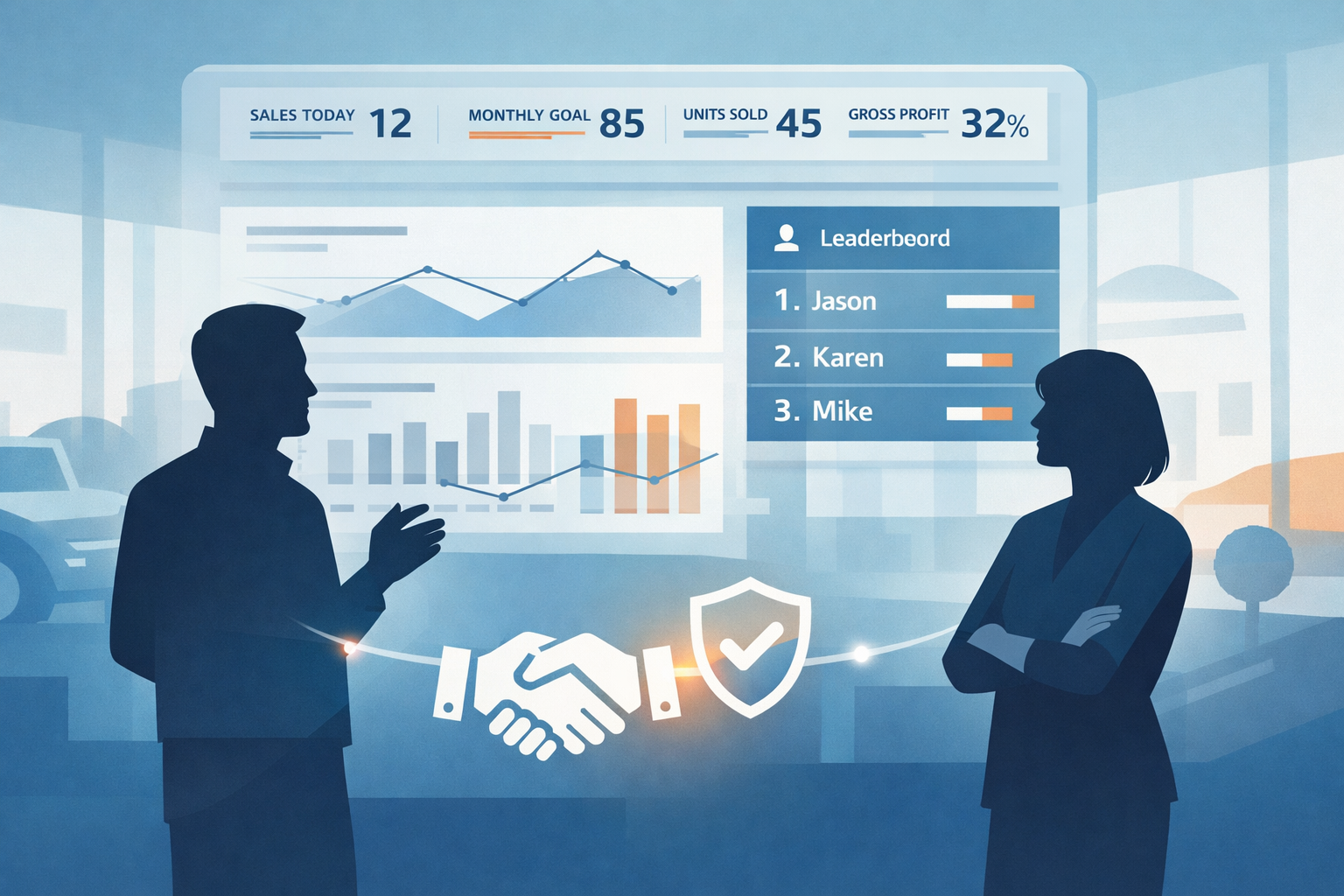
SalesLane is designed for visibility, not surveillance. The scoreboard shows deal flow, leaderboards, and goal progress because all parties (salespeople, managers, and executives) benefit from that shared view. Salespeople see their ranking climb. Managers see deal flow without hovering at desks. Executives see group performance without waiting for reports.
Surveillance systems, by contrast, track individuals in ways that only benefit managers (keystrokes, screen time, location). The information flows upward, not outward. Trust erodes because employees sense the imbalance. The first scenario drives engagement. The second breeds resentment.
The key difference:
- Visibility: Everyone sees the same data. The information helps each person do their job better.
- Surveillance: Data is captured about individuals and reviewed only by managers. Employees feel watched, not empowered.
Transparency Built for Trust
How can organizations deliver visibility without crossing into surveillance?
- Show shared metrics, not personal monitoring. Focus dashboards on outcomes like deals closed, goals hit, and team performance rather than inputs like keystrokes, breaks, or mouse activity. People should see how their work contributes to a shared goal.
- Give everyone access. When data flows only upward, employees feel watched. When data flows outward, everyone can see the same truth. SalesLane's showroom TV makes rankings visible to the whole team, not just managers.
- Focus on progress, not punishment. Transparency should illuminate opportunities, not catch mistakes. Celebrate milestones publicly. Handle problems privately.
- Be clear about what's tracked and why. Employees should know exactly which data is visible and how it benefits them. Surprise surveillance destroys trust. Clear communication preserves it.
- Let people opt into deeper visibility. Some team members may welcome more detailed feedback. Give them the option without mandating it for everyone.
What SalesLane Tracks (and What It Doesn't)
SalesLane focuses on deal and goal data, not personal surveillance metrics:
- Tracks: Units sold, gross profit, deal status, goal progress, pending deliveries, leaderboard rankings, product badges.
- Doesn't track: Keystrokes, time spent at desk, personal locations, screen activity, bathroom breaks.
The platform knows nothing about how long you stared at a screen. It only knows whether deals are moving. This design reflects our philosophy: sales is an outcomes business. What matters is results, not surveillance of process.
Why Transparency Improves Performance
When data is visible and meaningful, team members compete and perform. In the absence of data, people disengage.
Transparency creates its own accountability. When a salesperson's goal is visible to teammates, they feel social pressure to hit it. When deal flow is visible to everyone, no one can hide progress or pretend things are fine. When finance managers see their product penetration next to their name, they take ownership of those numbers.
This isn't about catching underperformers. It's about giving performers the visibility they need to stay engaged and grow.
Research supports this. Gallup's workplace engagement studies find that employees are more engaged when they understand how their work contributes to team goals, when feedback is immediate and visible, and when progress is recognized publicly. Transparent dashboards provide all three: context, immediacy, and recognition.
A Note on Finance Teams
Finance managers in dealerships have historically been invisible in scorekeeping. Their contributions (product penetration, back-end gross) weren't displayed next to their names.
SalesLane changes that. The finance leaderboard shows who sells what products, who earns badges for excellence, and who leads in overall gross. For the first time, finance managers can compete, grow, and get recognized in real time.
Visibility isn't just for salespeople. When every role has its own scoreboard, everyone can contribute to a shared pursuit.
The Takeaway: Data Shared, Not Hoarded
Visibility without surveillance requires intentional design. Dashboards should:
- Focus on shared metrics
- Be accessible to everyone they affect
- Illuminate progress, not police behavior
- Be clear about what's tracked and why
When transparency is done right, it doesn't feel like monitoring. It feels like a shared game everyone can see and play. That's the difference between Big Brother and a scoreboard.
Ready to Build Trust Through Transparency?
See how SalesLane delivers visibility that empowers, not watches.
See How It Works