Why Competition Works (and When It Doesn't)
From schoolyard games to sales floors, humans naturally compare themselves with others. Psychologists call this social comparison theory. We gauge our performance by looking at our peers; the right kind of competition can inspire us to stretch further. But competition can also demotivate if the playing field feels unfair or the gap between top and bottom performers is too wide.
Research has found that tier-based leaderboards, which group employees into bands of similar performance, lead to significantly higher motivation for both high- and low-positioned individuals compared with a single list. Tier-based boards change the comparison field so individuals feel they're competing with peers at a similar skill level. Participants perceived tier-based leaderboards as fairer and were less likely to give up.
Gamification research reinforces these findings. Leaderboards and challenges foster healthy competition, encourage goal setting, and promote collaboration. Recognition through badges and points provides an immediate sense of achievement, strengthening employees' connection to their work.
However, extrinsic rewards alone may not sustain long-term engagement. The most effective systems combine recognition with intrinsic motivators like autonomy, competence, and relatedness. In short, leaderboards work best when they're designed with fairness and meaning in mind.
The SalesLane Philosophy: Competition as Fuel, Not Pressure
SalesLane's scoreboard embraces the psychology of competition while avoiding its pitfalls.
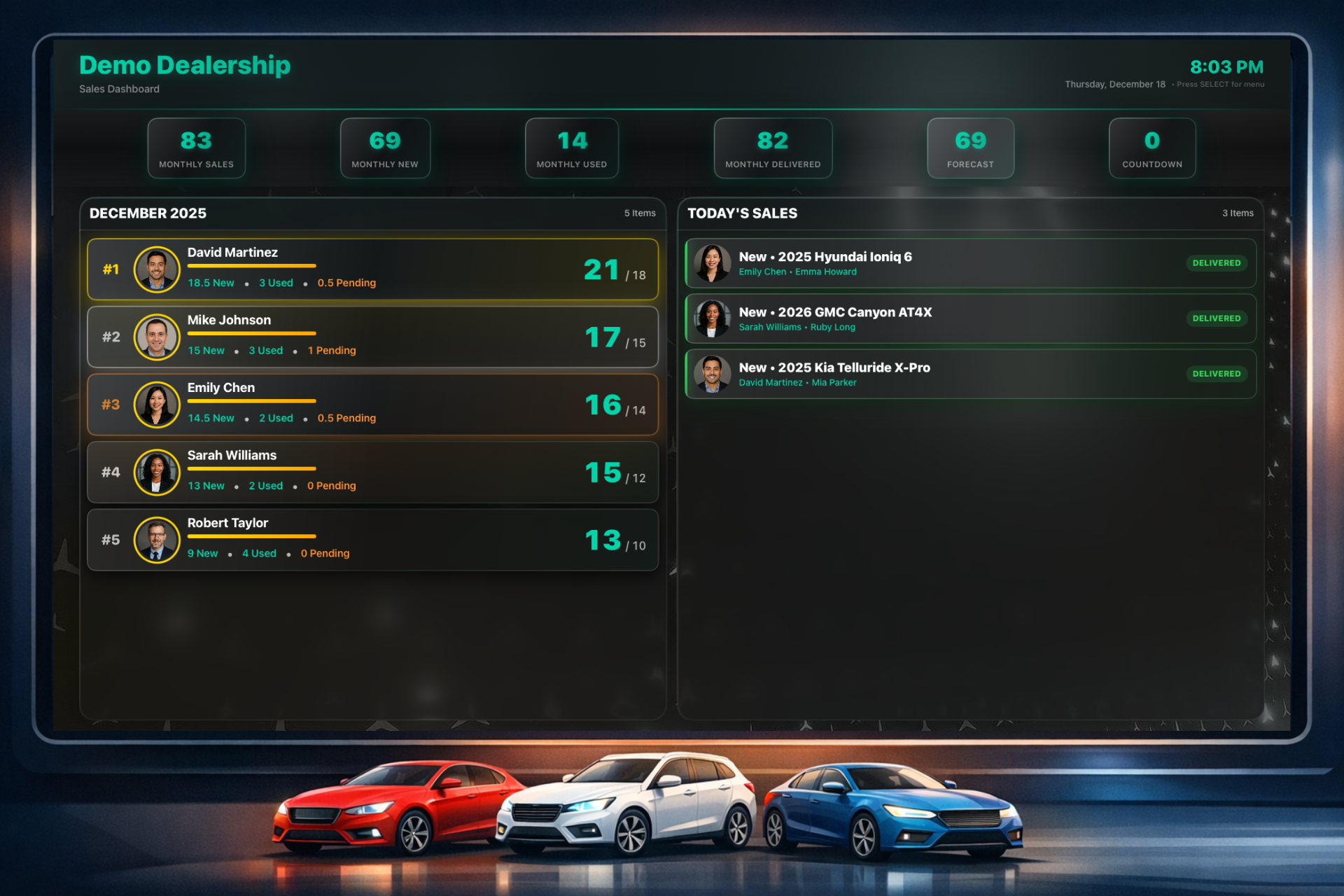
On the SalesLane TV display, each salesperson's card shows their current rank, units delivered, pending deals, and personal goal. It's not just about who's number one. It's about the journey to the goal. When goals are public, they become commitments. Salespeople chase their own number, and when they hit it, everyone sees that victory. This visibility sparks momentum and accountability across the floor.
Contrast this with traditional whiteboards. Manual boards often have inaccurate data, limited visibility, and slow, reactive processes. Digital leaderboards, on the other hand, provide real-time accuracy, live reporting, and universal access. When every sale is logged instantly and everyone sees the same numbers, trust in the system grows.
Nobody wants to live on page 2. Live rankings fuel competitive fire and help everyone keep score.
Healthy Competition vs. Toxic Pressure
Competition motivates because it taps into our desire for mastery and recognition. But it can backfire when it becomes punitive or zero-sum. Here are guidelines for fostering healthy competition:
- Set clear and achievable goals. Effective leaderboards start with clear objectives and KPIs. Unreachable targets create frustration; realistic goals inspire progress.
- Design fair comparisons. Use tier-based leaderboards or categories to ensure people compare themselves to similar peers. Avoid pitting rookies against veterans.
- Recognize effort, not just outcomes. Celebrate milestones and progress, not only the final ranking. Real-time notifications and recognition boost morale.
- Balance individual and team metrics. Gamification should promote collaboration as well as competition. Include team-based goals to encourage mutual support.
- Combine intrinsic and extrinsic motivators. Points and badges provide immediate feedback, but lasting motivation comes from autonomy and mastery. Give employees some control over how they achieve their goals.
- Keep it transparent. Communicate the rules and ranking methodology. Employees need to trust the system; unclear or hidden metrics breed resentment.
Leaderboards in Action: Beyond Sales
Leaderboards aren't just for unit sales. SalesLane extends the concept to finance products and service metrics.
Finance managers can see product penetration and attach-rate goals next to their names for the first time. Service teams can track throughput and efficiency. When every department has its own scoreboard, the entire dealership speaks the same language of progress.
Beyond automotive, digital sales boards are becoming standard in retail and service industries. Over 63% of retail and automotive dealers now use digital dashboards to monitor team KPIs. Organizations adopt these boards to centralize real-time performance visibility, boost motivation, and standardize communication. Adoption grows because transparency and competition drive results.
The Takeaway: Competition Done Right
Competition is a powerful force when harnessed thoughtfully. Leaderboards turn invisible efforts into visible progress. They remind salespeople that every deal matters.
But the psychology of competition demands care. Fairness, context, and recognition transform leaderboards from punitive scorecards into engines of growth. The SalesLane approach (public goals, real-time data, and meaningful comparisons) shows that competition doesn't have to be cutthroat. It can be a shared pursuit that lifts the entire team.
Ready to Harness Healthy Competition?
See how SalesLane's leaderboards drive performance without the pressure.
See How It Works