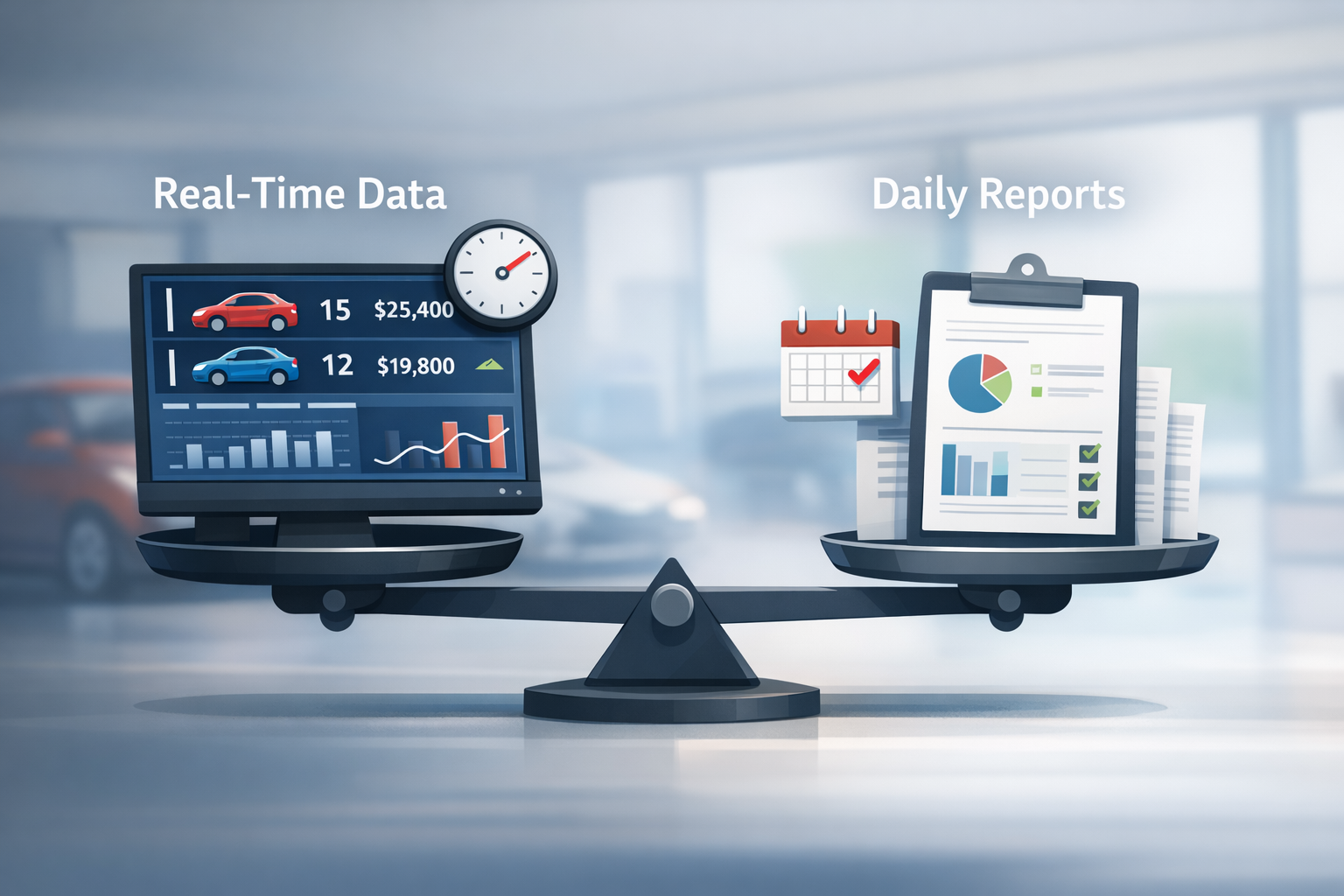
The Case for Real-Time
Data isn't just about speed; it's about timing. Real-time visibility empowers action in the moment, but overwhelming teams with constant updates can backfire.
Real-time data empowers sales teams in several ways:
- Immediate feedback: Salespeople see a deal close instantly, reinforcing behavior and boosting motivation.
- Live leaderboards: Competition intensifies when rankings update as the day unfolds, not at the end of the week.
- Coaching in the moment: Managers can spot slumps and intervene before the month slips away.
- Momentum visibility: When a store sees three deals logged before noon, the mood shifts. That visibility matters.
Research supports this. Behavioral science tells us that immediate feedback is more powerful than delayed feedback. When the consequence of an action is visible instantly, people learn faster and stay more engaged.
In dealerships, this means a salesperson who sees their leaderboard position climb immediately after closing a deal feels the reward right away. That feedback loop reinforces effort and keeps the game alive.
The Case for Scheduled Metrics
But real-time isn't always better. Some data is more meaningful when aggregated over time:
- Trend analysis: Daily fluctuations obscure patterns. Monthly and quarterly trends reveal what's really working.
- Goal review: Reflecting on progress at set intervals (weekly meetings, monthly reviews) allows for thoughtful discussion.
- Reduced noise: Not every piece of data needs immediate attention. Scheduled reports help teams focus on what matters.
- Coaching context: Some coaching conversations need perspective, not just speed.
Scheduled analytics allow managers to step back and see the bigger picture. They're essential for strategic decisions: staffing, marketing investments, inventory planning.
When Each Approach Works Best
Different scenarios call for different timing:
| Scenario | Best Approach |
|---|---|
| Showroom leaderboard | Real-time |
| Deal status for managers | Real-time |
| Commission tracking | Real-time with end-of-month summary |
| Year-over-year analysis | Scheduled (monthly or quarterly) |
| Goal setting and review | Scheduled (weekly or monthly) |
| Performance coaching | Real-time for intervention, scheduled for development |
| Strategic planning | Scheduled with historical context |
The key insight: real-time data is about action; scheduled data is about perspective. Both matter.
How SalesLane Balances Both
SalesLane provides both real-time visibility and scheduled analytics, designed for different purposes:
Real-time features:
- Live leaderboard on showroom TV and mobile
- Today's Sales feed with instant updates
- Deal flow and delivery rack visibility
- Notifications when deals close
Scheduled/analytical features:
- Dealer Pulse with MTD, QTD, and YTD views
- Year-over-year comparisons ("On this day last year...")
- Goal progression charts
- Historical navigation to review previous months
- Commission PDF export for payroll review
The TV display rotates between real-time elements (leaderboard, today's sales) and summary views (month-to-date snapshot, goal progress). This design gives the floor immediate feedback while providing management the perspective they need.
Avoiding Information Overload
The risk with real-time data is overwhelm. When everything updates constantly, nothing stands out. Teams can become numb to notifications or distracted by noise.
To avoid this, SalesLane focuses real-time updates on high-impact moments:
- A deal closing (changes the leaderboard)
- A salesperson hitting their goal (celebration moment)
- A store earning a "Hot Dealership" badge
Less critical data (YoY trends, gross averages) lives in dashboards accessed on demand, not pushed constantly.
The design principle: push what demands action, pull what provides perspective.
Practical Guidelines for Your Team
- Decide what needs real-time visibility. Typically, this includes competitive metrics (leaderboards), deal flow, and goal progress.
- Reserve scheduled reviews for reflection. Weekly or monthly meetings work best for trend analysis and developmental coaching.
- Limit push notifications. Only alert people to moments that genuinely require attention or celebration.
- Teach both modes. Train managers to use real-time data for in-the-moment coaching and scheduled data for planning conversations.
- Iterate based on feedback. Ask your team what's helpful and what's noise. Adjust accordingly.
Conclusion
The debate between real-time and scheduled metrics isn't either/or. Both serve different purposes. Real-time data fuels momentum and action. Scheduled analytics provide context and strategy.
The best systems, like SalesLane, offer both. They put the scoreboard on the floor where it matters most, while giving managers the historical depth they need to lead effectively.
Data timing isn't just a technical decision. It's a design philosophy. Get it right, and your team will feel both informed and empowered.
Ready to See Both in Action?
SalesLane delivers real-time visibility and scheduled analytics in one platform.
See How It Works